What Is Cirrhosis of the Liver?
Cirrhosis is a condition where healthy liver tissue is progressively replaced by scar tissue (fibrosis), permanently damaging the liver's architecture. Unlike healthy liver tissue, scar tissue cannot perform the liver's 500+ vital functions — including filtering toxins, producing clotting proteins, and metabolising nutrients.
Cirrhosis is the end result of long-standing liver inflammation from many causes. It develops slowly — often over 10–20 years — and is frequently asymptomatic in its early stages. By the time symptoms appear, significant damage has already occurred, which is why routine screening in high-risk patients is critical.
What Causes Cirrhosis?
- Alcohol-related liver disease: The most common cause in urban India. Long-term heavy drinking inflames and ultimately scars the liver.
- Chronic Hepatitis B: The leading cause in rural and semi-urban India. Can be cured or controlled with antiviral therapy.
- Chronic Hepatitis C: 90%+ cure rate with direct-acting antivirals (DAAs) — preventing cirrhosis progression.
- MASLD / NAFLD (Fatty Liver): Metabolic-associated steatotic liver disease — increasingly common in non-drinkers with obesity, diabetes, or high cholesterol.
- Autoimmune hepatitis: The immune system attacks liver cells; responds to steroid therapy.
- Wilson's disease and Haemochromatosis: Rare genetic conditions causing copper and iron overload.
- Primary biliary cholangitis and Primary sclerosing cholangitis.
The Child-Pugh Stages of Cirrhosis
Cirrhosis severity is classified using the Child-Pugh score and MELD score (Model for End-Stage Liver Disease). These determine treatment urgency and transplant eligibility.
Compensated
Liver still managing adequately. May have no obvious symptoms. Treatable with medication and lifestyle change.
Moderate
Complications beginning — mild ascites, reduced albumin. Requires close monitoring and specific medical management.
Decompensated
Liver failing. Active jaundice, severe ascites, encephalopathy, bleeding varices. Transplant evaluation recommended.
Symptoms: Recognising Cirrhosis
Seek Urgent Evaluation If You Notice:
- Yellowing of the skin or eyes (jaundice)
- Swelling in the abdomen (ascites) or legs (oedema)
- Vomiting blood or passing black tarry stools (variceal bleeding)
- Confusion, memory loss, or personality changes (hepatic encephalopathy)
- Extreme fatigue and weakness
Earlier Warning Signs
- Persistent fatigue and weakness for weeks or months
- Loss of appetite and unintentional weight loss
- Nausea and mild abdominal discomfort (upper right)
- Easy bruising or bleeding from minor cuts
- Spider angiomas (red, spider-like blood vessels) on the skin
- Palmar erythema (red palms)
Diagnosis and Investigations
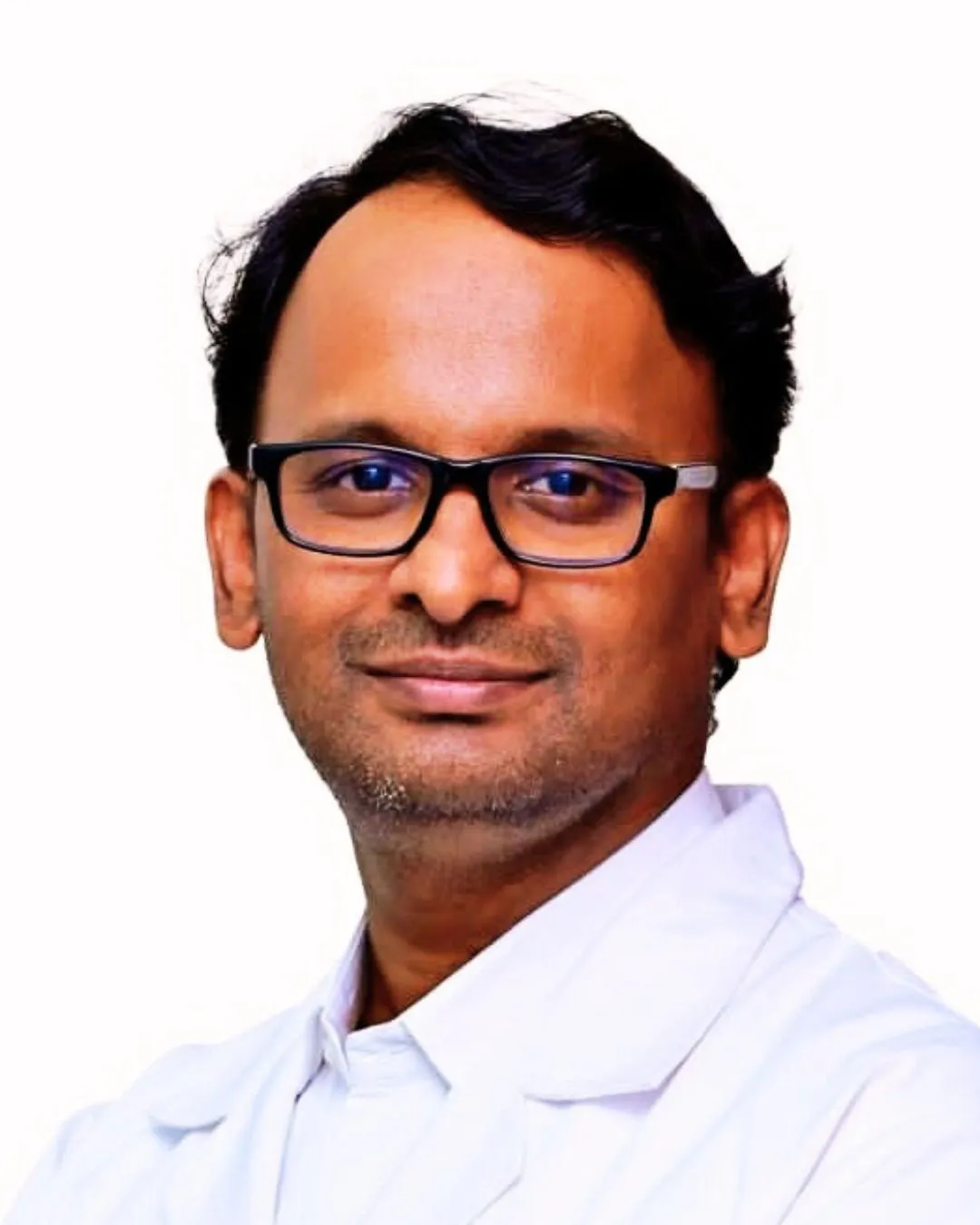
Dr. Srinivas Bojanapu conducts a thorough evaluation that goes beyond basic liver function tests (LFTs). Diagnosis involves:
- Blood tests: LFT panel, CBC, coagulation profile (PT/INR), AFP, Hepatitis B & C serology
- Imaging: Ultrasound, CT scan (with contrast), or MRI abdomen — to assess liver texture, size, and nodularity
- Fibroscan (Transient Elastography): Non-invasive measurement of liver stiffness — quantifies fibrosis without biopsy
- Upper GI Endoscopy: To check for oesophageal varices (enlarged veins that can bleed)
- MELD Score calculation: Determines transplant urgency
- Liver biopsy: Reserved for uncertain diagnoses
Treatment of Cirrhosis in Bengaluru
1. Treating the Underlying Cause
The most important step. Stopping alcohol, treating hepatitis B or C with antivirals, or managing metabolic syndrome can halt progression and in early stages, allow partial recovery.
2. Managing Complications
- Ascites: Low-sodium diet, diuretics (spironolactone + furosemide), and paracentesis (drainage) when needed
- Variceal bleeding: Endoscopic band ligation, beta-blockers (propranolol/carvedilol), and TIPSS procedure for refractory cases
- Hepatic encephalopathy: Lactulose, rifaximin, dietary protein management
- Spontaneous Bacterial Peritonitis (SBP): Antibiotic therapy + secondary prophylaxis
- Hepatocellular Carcinoma (HCC) surveillance: Every 6 months with ultrasound + AFP
3. Liver Transplantation
When cirrhosis becomes decompensated and the liver can no longer sustain life, liver transplantation is the only cure. Dr. Srinivas Bojanapu performs both Living Donor Liver Transplant (LDLT) and Deceased Donor Liver Transplant (DDLT) at Kauvery Hospital, Electronic City.
Transplant evaluation typically begins when the MELD score exceeds 15. Learn more about the Liver Transplant Evaluation process.
Prevention: What You Can Do
- Vaccinate against Hepatitis B (and A)
- Get tested for Hepatitis C if you are at risk (needle sharing, transfusions before 1992)
- Limit or eliminate alcohol
- Achieve and maintain healthy weight — even moderate weight loss reverses fatty liver
- Manage diabetes and cholesterol with regular monitoring
- Annual liver function tests if you have risk factors